
Advantages of the Minimally Invasive Oblique Lumbar Interbody Fusion (OLIF) Technique Explained
Discover the Benefits of the Oblique Lumbar Interbody Fusion (OLIF) Surgical Approach
What is Oblique Lumbar Interbody Fusion (OLIF)?
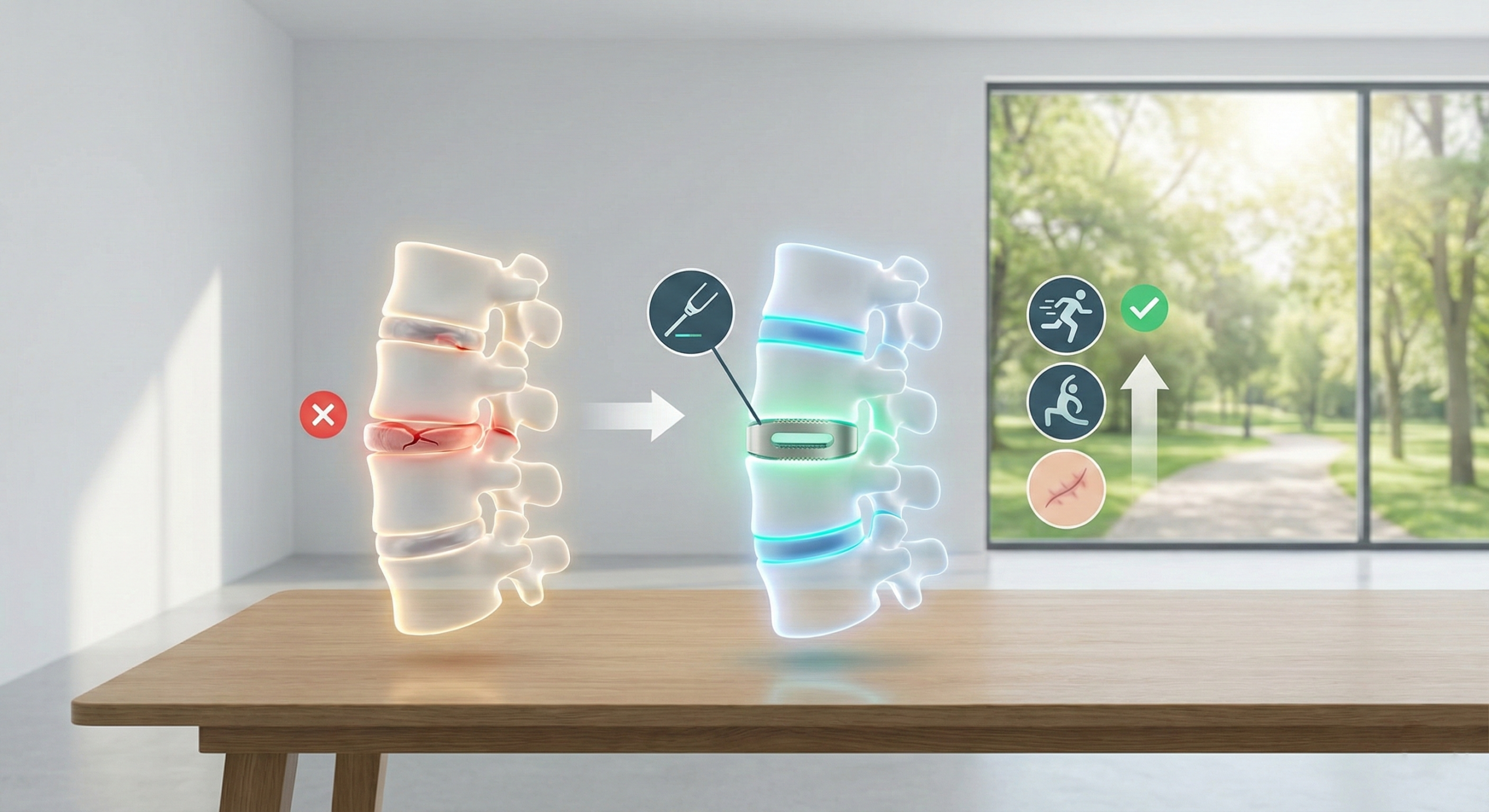
Oblique Lumbar Interbody Fusion (OLIF) is a minimally invasive spine surgery technique designed to treat degenerative disc disease, spondylolisthesis, and lumbar spine instability. Unlike traditional methods such as PLIF (Posterior Lumbar Interbody Fusion) or TLIF (Transforaminal Lumbar Interbody Fusion), OLIF uses an anterior-to-psoas, pre-psoas surgical approach. This innovative technique allows surgeons like Dr. Firas Husban to access the lumbar spine without damaging major back muscles, which significantly reduces blood loss and post-operative pain.
Advantages of the OLIF Spine Surgery Technique
The minimally invasive OLIF technique offers numerous advantages for patients:
-
Reduced Tissue Damage: By avoiding cutting through the back muscles, OLIF minimizes tissue trauma.
-
Indirect Decompression: Restoring disc height alleviates nerve compression without extensive bone removal.
-
Faster Recovery: Patients experience shorter hospital stays and quicker return to daily activities.
-
High Fusion Success Rate: OLIF provides excellent spinal alignment and stability for levels L2-S1, including the challenging OLIF L5‑S1 approach.
-
Lower Risk of Complications: Compared to PLIF and TLIF, OLIF reduces perioperative risks and adjacent segment disease.
OLIF vs. PLIF: A Comparison of Outcomes
Studies show that OLIF spinal fusion offers better clinical outcomes than traditional PLIF surgery, particularly in terms of post-operative pain, mobility, and disc height restoration. Dr. Firas Husban carefully evaluates each patient to determine if OLIF is the optimal procedure, especially for cases involving degenerative lumbar stenosis or multi-level lumbar fusion.
Why Choose Dr. Firas Husban for OLIF Surgery
Dr. Firas Husban, a leading spine surgeon in Jordan and the Middle East, specializes in OLIF and minimally invasive spinal fusion techniques. His extensive experience includes:
-
OLIF for spondylolisthesis and degenerative disc disease
-
OLIF L2-S1 multilevel fusion procedures
-
Advanced minimally invasive spine surgery techniques
-
Endoscopic and orthopedic spine interventions
Patients benefit from personalized care, evidence-based practice, and innovative surgical techniques, ensuring the best possible outcomes for OLIF spine surgery.
Postoperative Recovery and Rehabilitation
Recovery after OLIF surgery is generally faster and smoother compared to traditional methods. Patients experience reduced post-operative pain, quicker mobility, and minimal scarring. Dr. Firas Husban emphasizes a tailored rehabilitation program to restore gait, flexibility, and spinal stability, helping patients return to their normal lifestyle sooner.
Conclusion: The Future of Spine Surgery
Oblique Lumbar Interbody Fusion (OLIF) represents a revolution in spinal surgery, combining minimally invasive techniques with high fusion success rates. Patients under the care of Dr. Firas Husban can expect effective treatment, reduced complications, and accelerated recovery. For anyone considering OLIF spine surgery, Dr. Firas Husban offers expert consultation and advanced care tailored to individual lumbar spine conditions.
Post Tags :
- Anterior to psoas spinal fusion
- Anterior‑to‑psoas lumbar fusion
- Dr. Firas Husban
- Dr. Firas Husban endoscopic spine surgery
- Dr. Firas Husban Jordan spine surgery
- Dr. Firas Husban Middle East spine surgery
- Dr. Firas Husban minimally invasive spine surgery
- Dr. Firas Husban OLIF surgery
- Dr. Firas Husban orthopedic surgeon
- Dr. Firas Husban patient cases
- Dr. Firas Husban scoliosis treatment
- Dr. Firas Husban spinal fusion
- Dr. Firas Husban spine surgeon
- Indirect decompression OLIF
- Lumbar interbody fusion L2-S1
- Lumbar interbody fusion L2‑L5 OLIF
- Minimally invasive OLIF technique
- Oblique lateral interbody fusion benefits
- Oblique lumbar interbody fusion (OLIF)
- OLIF adjacent segment disease
- OLIF advanced techniques
- OLIF blood loss data
- OLIF case studies
- OLIF clinical outcomes
- OLIF complications
- OLIF degenerative lumbar stenosis
- OLIF disc height restoration
- OLIF evidence-based practice
- OLIF for degenerative disc disease
- OLIF for spondylolisthesis
- OLIF fusion rate
- OLIF gait and mobility
- OLIF hospital stay
- OLIF innovative spine surgery
- OLIF intervertebral cage placement
- OLIF L2‑S1 multilevel fusion
- OLIF L5‑S1 approach
- OLIF lumbar anatomy considerations
- OLIF lumbar instability treatment
- OLIF meta‑analysis outcomes
- OLIF operative outcomes
- OLIF orthopedic surgery Journal research
- OLIF patient recovery
- OLIF patient satisfaction
- OLIF perioperative risks
- OLIF postoperative rehabilitation
- OLIF psoas muscle approach
- OLIF radiographic results
- OLIF radiological assessment
- OLIF spinal alignment correction
- OLIF spine fusion success rate
- OLIF spine surgeon expertise
- OLIF spine surgery
- OLIF surgical approach
- OLIF surgical indications
- OLIF versus PLIF outcomes
- OLIF versus TLIF comparison
- Pre‑psoas OLIF procedure
